
Multiple Sclerosis (मल्टीपल स्क्लेरोसिस)
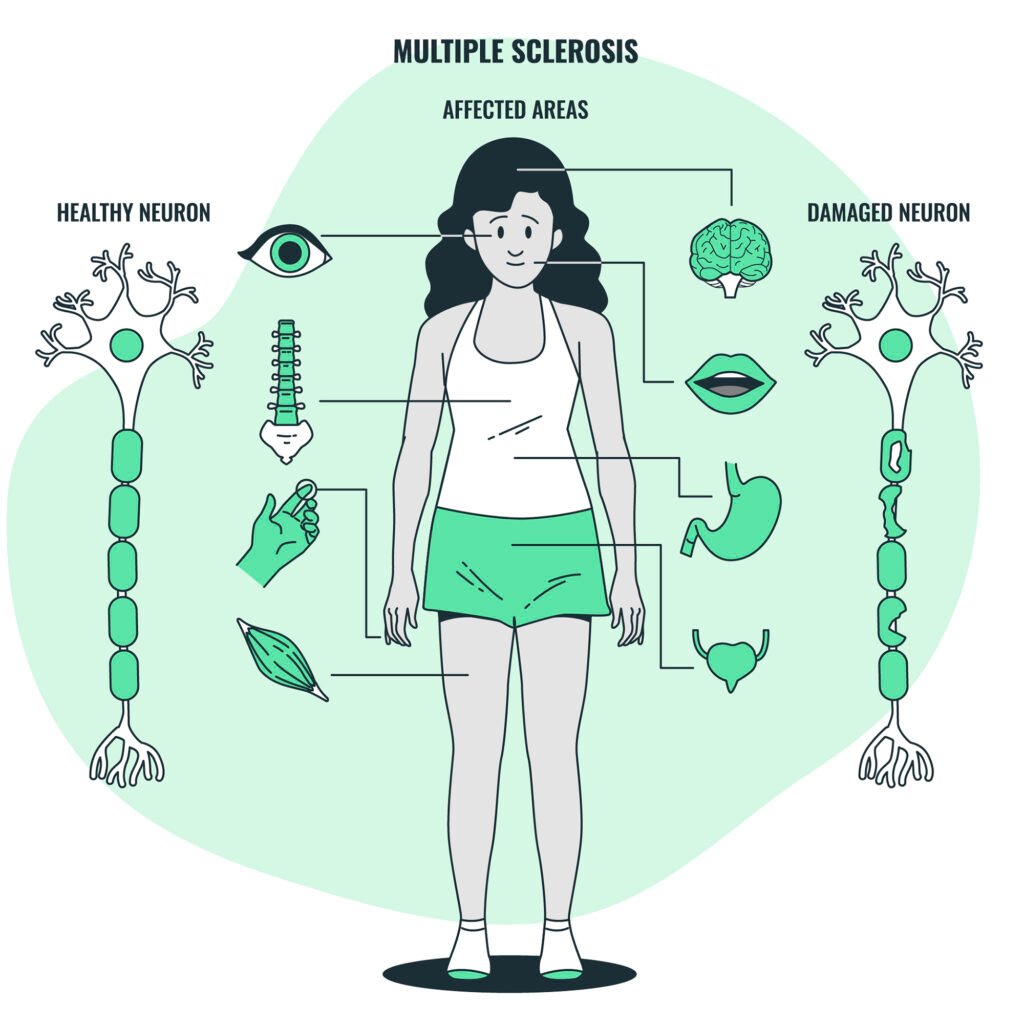
Understanding Multiple Sclerosis
Multiple sclerosis (MS) is a chronic autoimmune disorder in which the body’s immune system attacks the protective myelin sheath covering nerve fibers in the central nervous system. This damage disrupts communication between the brain and the rest of the body, leading to a wide range of neurological symptoms. MS typically follows an unpredictable course and affects individuals differently, making early recognition and monitoring crucial.
Types of Multiple Sclerosis
Clinically Isolated Syndrome (CIS)
A first episode of neurological symptoms lasting at least 24 hours, caused by inflammation or demyelination. Not all CIS cases progress to MS, but it carries a higher risk.Relapsing‑Remitting MS (RRMS)
Characterized by clearly defined relapses (flare‑ups) of symptoms followed by periods of partial or complete recovery (remissions). This is the most common form, accounting for about 85% of initial diagnoses.Secondary Progressive MS (SPMS)
Initially begins as RRMS but transitions into a steadily worsening course with or without superimposed relapses. Disability accumulates more progressively.Primary Progressive MS (PPMS)
Marked by a gradual worsening of neurological function from disease onset, without distinct relapses or remissions. This form affects roughly 10–15% of people with MS.
Common Causes and Risk Factors
The exact trigger of MS remains unknown, but several factors contribute to its development:
Autoimmune Dysfunction
The immune system mistakenly targets myelin, leading to inflammation and scarring (sclerosis) in the central nervous system.Genetic Susceptibility
Certain genetic profiles—especially variations in the HLA-DRB1 gene—increase risk, though MS is not directly inherited.Environmental Triggers
Low vitamin D levels, smoking, and exposure to certain viruses (e.g., Epstein–Barr virus) have been linked to higher MS incidence.Geographic and Lifestyle Factors
Incidence is higher in temperate climates and among individuals of Northern European descent. Migration studies suggest risk correlates with latitude and sun exposure.
Recognizing Symptoms
Symptoms of MS vary widely depending on the location and extent of nerve damage. Common early and ongoing signs include:
Sensory Disturbances
Numbness, tingling, or “electric shock” sensations (Lhermitte’s sign).Visual Problems
Optic neuritis: blurred vision, pain on eye movement, or partial vision loss, typically in one eye.Motor Dysfunction
Muscle weakness, spasticity, gait imbalance, and coordination difficulties.Fatigue
Overwhelming, persistent fatigue not proportional to activity level.Cognitive and Emotional Changes
Memory lapses, difficulty concentrating, mood swings, or depression.Bladder and Bowel Issues
Urgency, frequency, or incontinence; constipation may also occur.Pain and Sensory Motor Symptoms
Chronic neuropathic pain, muscle spasms, or tremors.
Early identification of symptoms and prompt neurological evaluation—including MRI of the brain and spinal cord, lumbar puncture for cerebrospinal fluid analysis, and evoked potentials—are vital steps toward accurate diagnosis and management. Understanding the types, causes, and warning signs of MS empowers patients and care teams to pursue timely interventions and supportive therapies.